Tomorrow, I get to take the day off work, but it’s no cause for celebration because instead of lounging about and enjoying my freedom, I have to go to the hospital and get an MRI done for an upcoming orthopedic appointment. This cancer stuff has messed up my right hip pretty badly (currently, I walk around with crutches) and I am hoping to get things fixed up so I can move it, move it.
Now, there are plenty of imaging methods at the modern doctor’s disposal. I’ve had CT scans, and PET scans, and good, old, localized X-rays. Each of these aforementioned techniques are effective and (mostly) non-evasive and I don’t really mind a single one. Sometimes when I get a CT scan, they have to inject me with iodine and that’s kind of uncomfortable, but the machine itself, with its large circular, tire-like cavity, and open, scanning aperture, is completely non-threatening. You simply lay down as that tire-style crescent hovers, zaps you, then retreats. No harm, no foul. The doctors get a good look at my gooey insides and I am left virtually unshaken.

(No, it’s not Star Wars, it’s a nice, open CT scanner.)
The blasted MRI (which stands for Magnetic Resonance Imaging) is a totally different story. The technology powering the hulking beast is pushing forty years and given the compact, future skills of the CT, I feel it’s high time they retire the ancient behemoth.
The thing is, lots of working doctors prefer MRI images to CTs or PET scans, because they know how to read them. They’ve been doing it for years and the garbled pictures (which look like garbage to the civilian eye) make sense to them. They know what to look for. New tech (or, rather, new tech for an old doctor stuck in their ways) is always confusing, but with a little effort often proves superior.
So it goes with imaging technology. I’ve met tons of doctors since the cancer hit and lots of them are old dogs not interested in new tricks. They’d rather send me to an infernal machine that (literally) takes up a whole building and requires fifteen to twenty minutes to process an image as opposed to the fast, efficient machines running the latest technology.
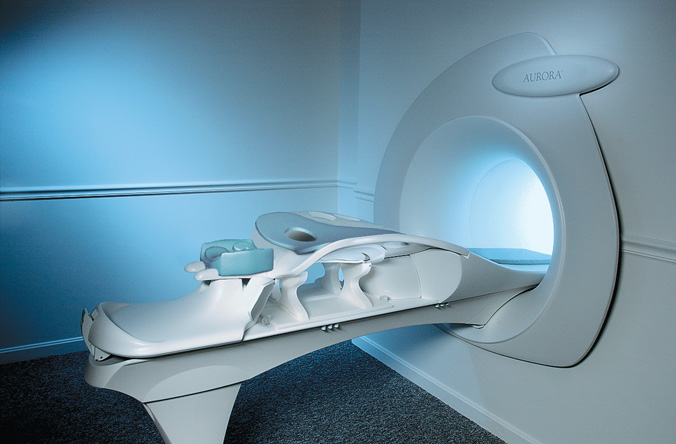
(This is a little newer than the MRI machines I’m accustomed to, but it’s still damned claustrophobic up in those glowing lights.)
That the MRI machine truly occupies an entire building doesn’t bug me. It’s kind of kitschy in an old, 70s, super-computer way. It’s the coffin like confinement that gets my goat. I’m generally good with all of this uncomfortable hospital crap. IVs, blood work, needles, jabs, draws, etc… I’m cool. I grin and bear it and move on. We do what we must to survive. The MRI on the other hand, freaks me out like no other. Despite the machine’s crazy size, its single entry point barely accommodates a lone, sliding table and the nervous human strapped to it. Talk about claustrophobia. They squeeze you in place and you are immediately surrounded on all sides by gargantuan, hissing, buzzing panels of plastic.
I have to close my eyes and take deep grounding breaths to keep it together. Before you begin they ask you questions about metal (since the machine operates off of a huge magnet, it’s capable of ripping metal augments from your body!) and basic things like, “Are you claustrophobic?” I made a point to answer, “Yes,” hoping they’d drug me or something, but then they don’t do a thing about it! They quickly check a little box, and raise their eyebrows, and usher you on in to the constricting death tube.
Hello?
Why even ask if you aren’t going to do something to help?
I even bugged the tech and asked as much. He shrugged and told me to breathe in and breathe out. Thanks, pal. Appreciate the advice.
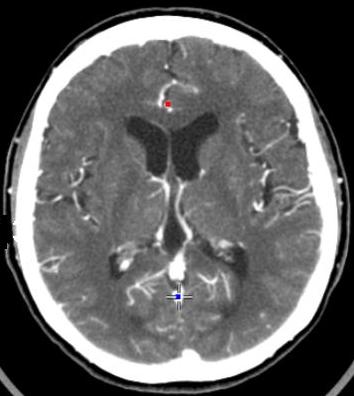
(Brain scan!)
Oh well, I suppose it’s best to just not think about. Twenty, thirty minutes, arms tightly by my side, legs straight, feet stiff, mind on the verge of a freak out…
I hate it, but whatever. I can handle it.
See you, tomorrow, Loyal Reader.






















 Michael Louis Calvillo Must Be Destroyed